Our Work
Our Reasons To Act
The most effective proven family planning solutions are not reaching the women they were designed for.
There are 164 million women in the world who want to delay or avoid pregnancy but don’t have the information or contraceptives they need to do so (UNDESA, 2022). Many of them live in rural and hard-to-reach areas.
Lack of choice extinguishes young women’s plans and dreams and can even be a death sentence: Every third maternal death in the world happens in Nigeria (WHO, 2023). Nigerian women are risking death because they can’t choose when to give life.
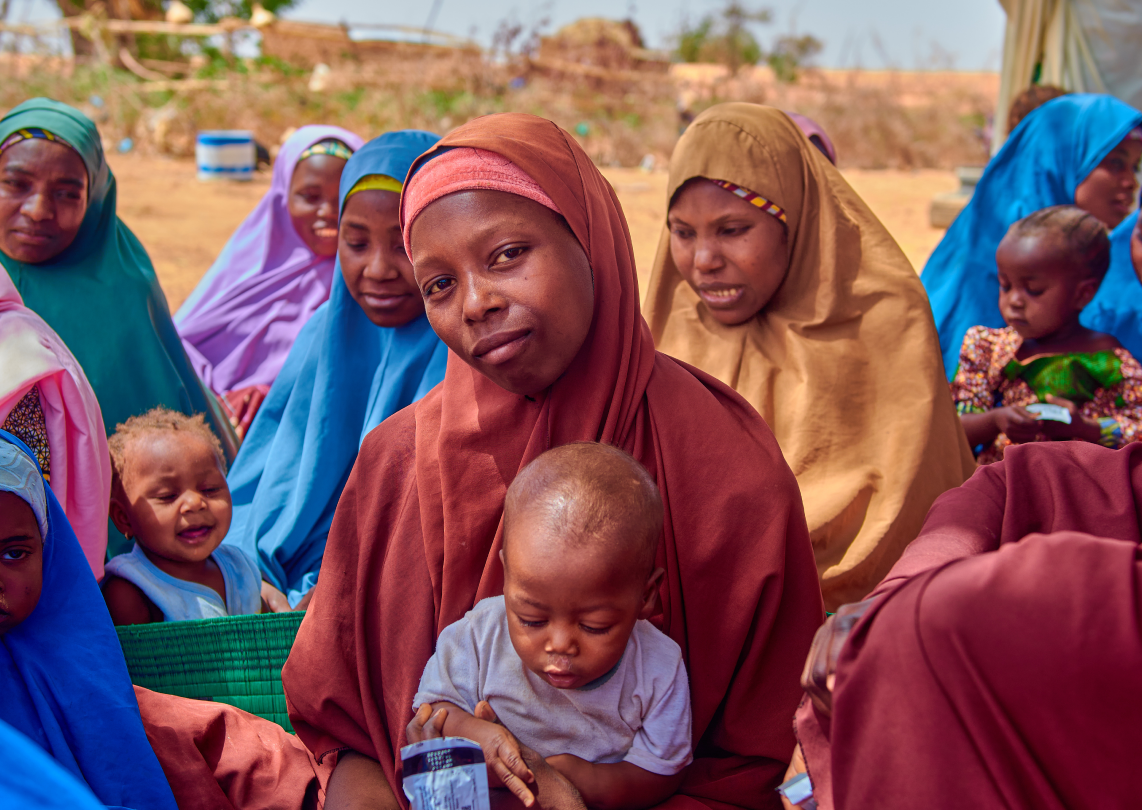
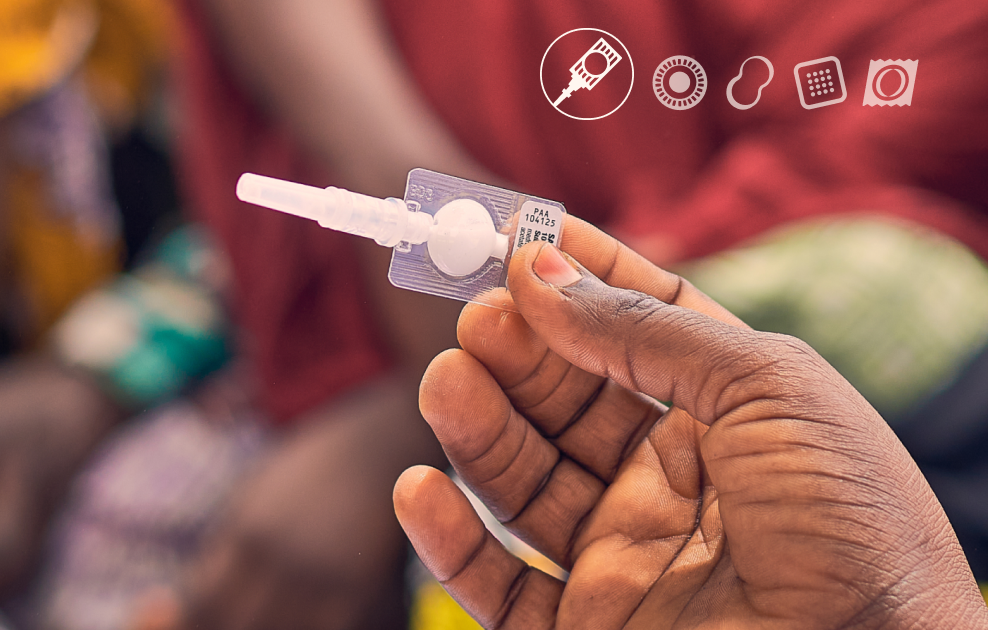
The tragedy is greater because a solution already exists: It’s contraception. There is a range of effective contraceptive options, including DMPA-SC, a modern injectable contraceptive that was introduced over 10 years ago. No one has figured out how to get it to all the women who need it, particularly those living in remote rural areas where the risks and consequences of pregnancy are the highest due to limited healthcare and misconceptions about family planning.

Why Family Planning Matters
Family planning use has a wealth of advantages.
Economic empowerment
In Nigeria, women’s use of contraception led to a 10–12% increase in doing paid work the following year and a nearly 15% increase in control over use of wages (Guttmacher Institute, 2025).
Maternal health
Full provision of contraceptive services and high-quality pregnancy and newborn care can decrease the maternal death rate by 68% in Nigeria (Guttmacher Institute, 2019).

Societal benefits
Addressing the unmet need for contraceptives generates on average $120 in annual benefits, including $30-$50 from reduced infant and maternal mortality, and $60-$100 in long-term benefits from economic growth (FP2030, 2018).

Child wellbeing
Reducing unintended pregnancies frees household resources, increasing per-child spending by up to 15 percent. More working mothers, more disposable income, better cared-for children.

More efficient healthcare expenditure
Every $1 invested in modern contraception in LMIC saves $2.48 in maternal, newborn, and abortion care costs (Guttmacher, 2025).

Family planning saves lives. It is our vision to ensure that every woman and girl has the knowledge, ability and power to choose and use high quality family planning services.
Our Model
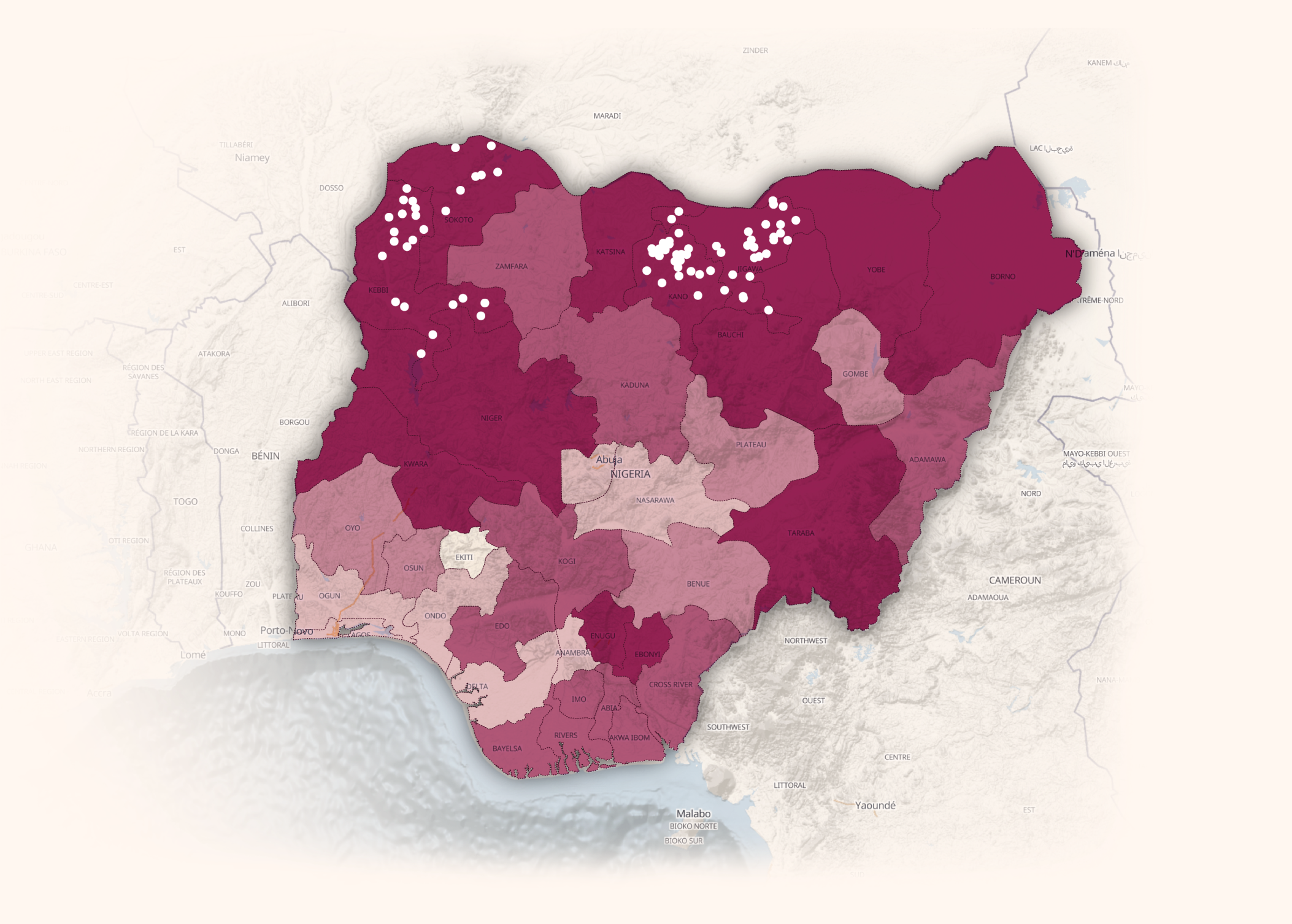
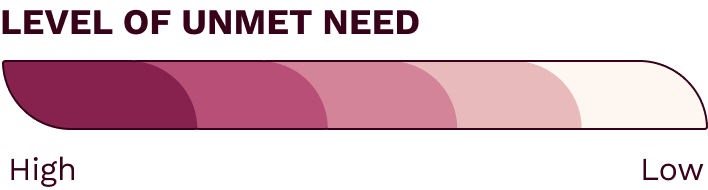
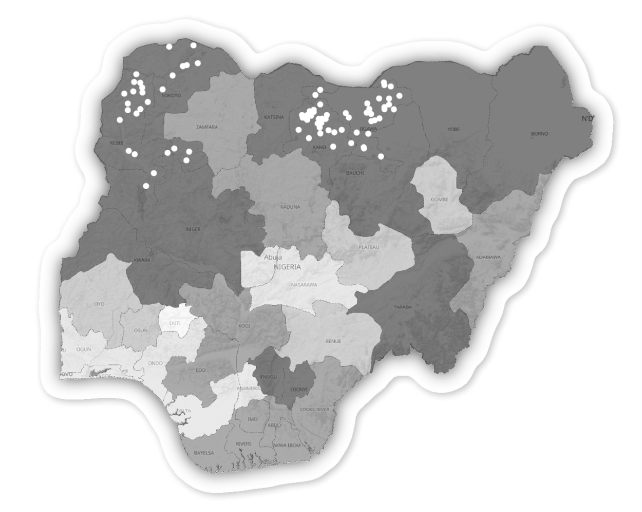
We identify left-behind communities with a high unmet need for family planning.
Our Model
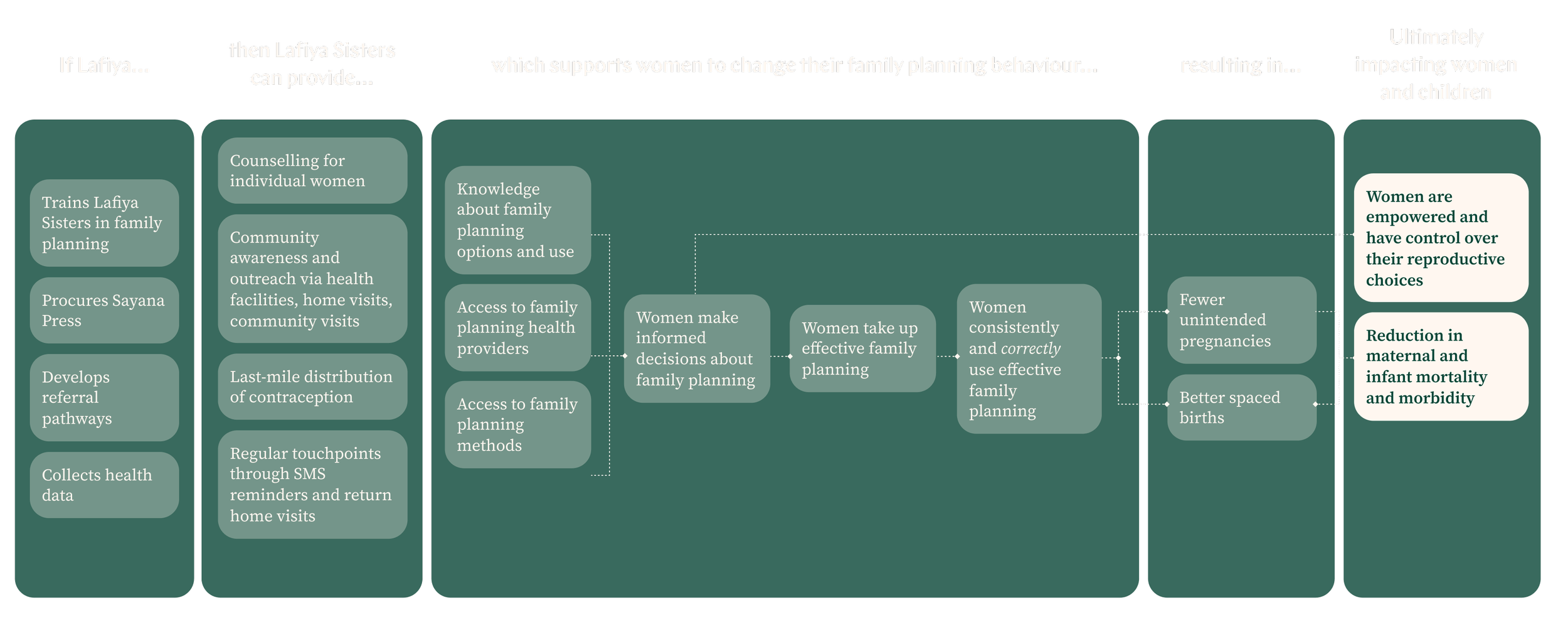
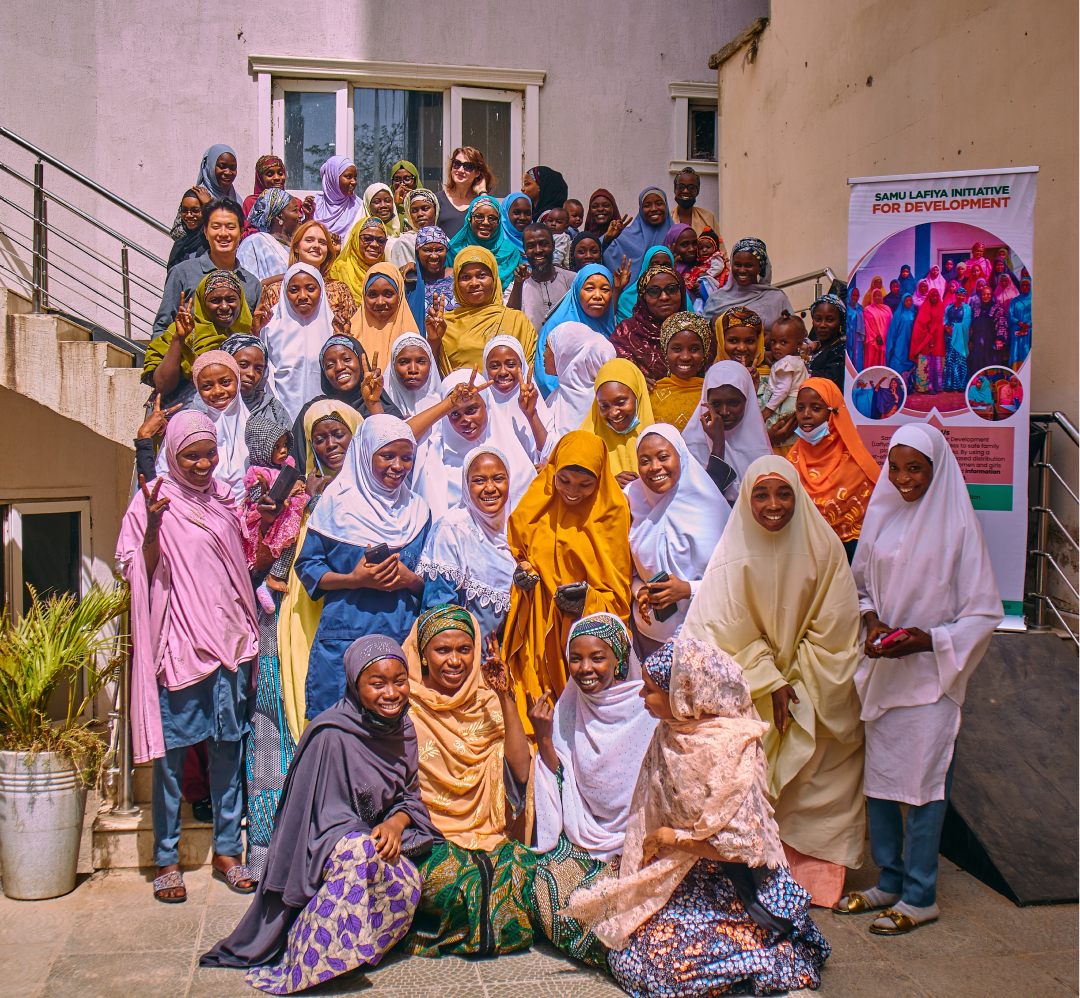
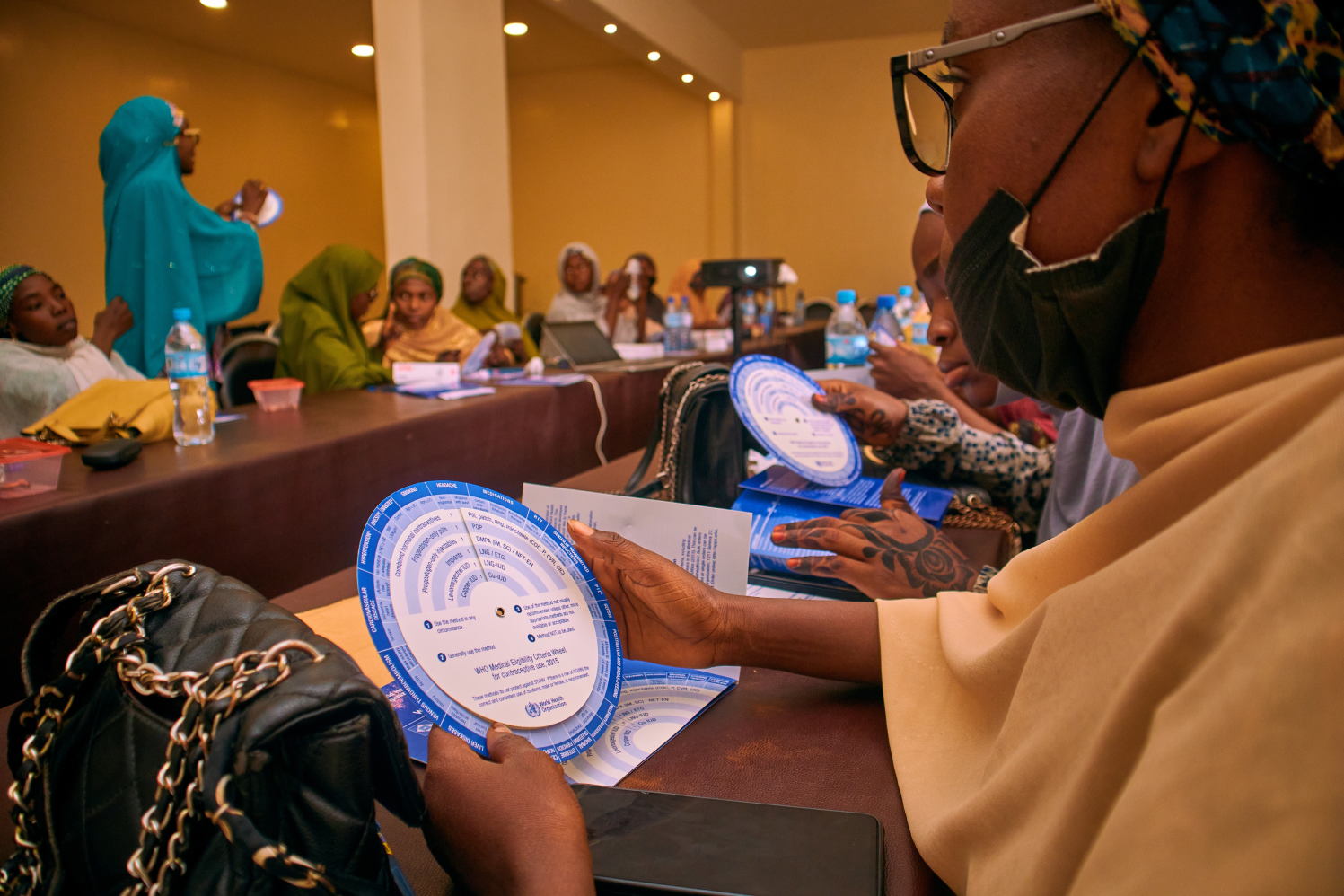
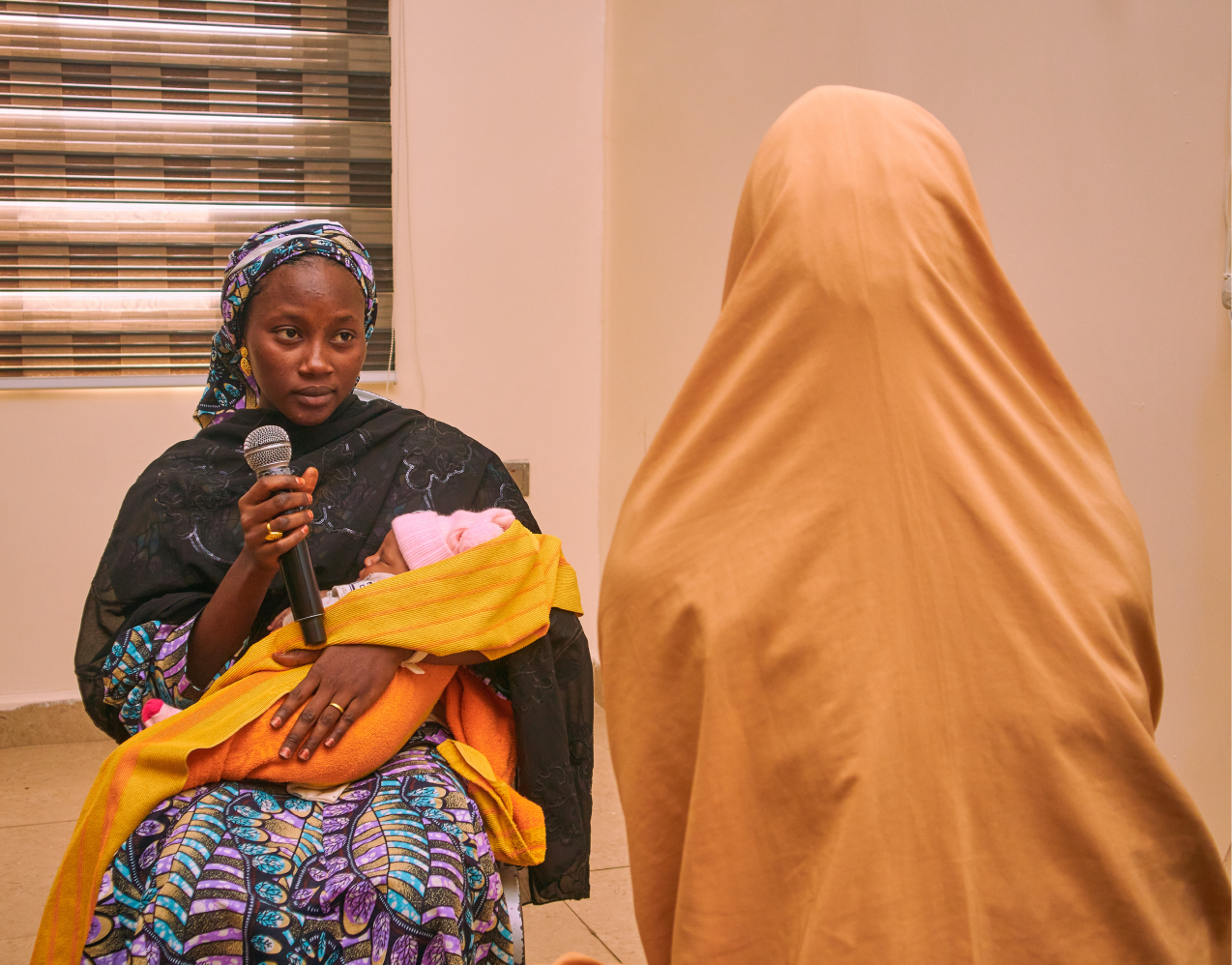
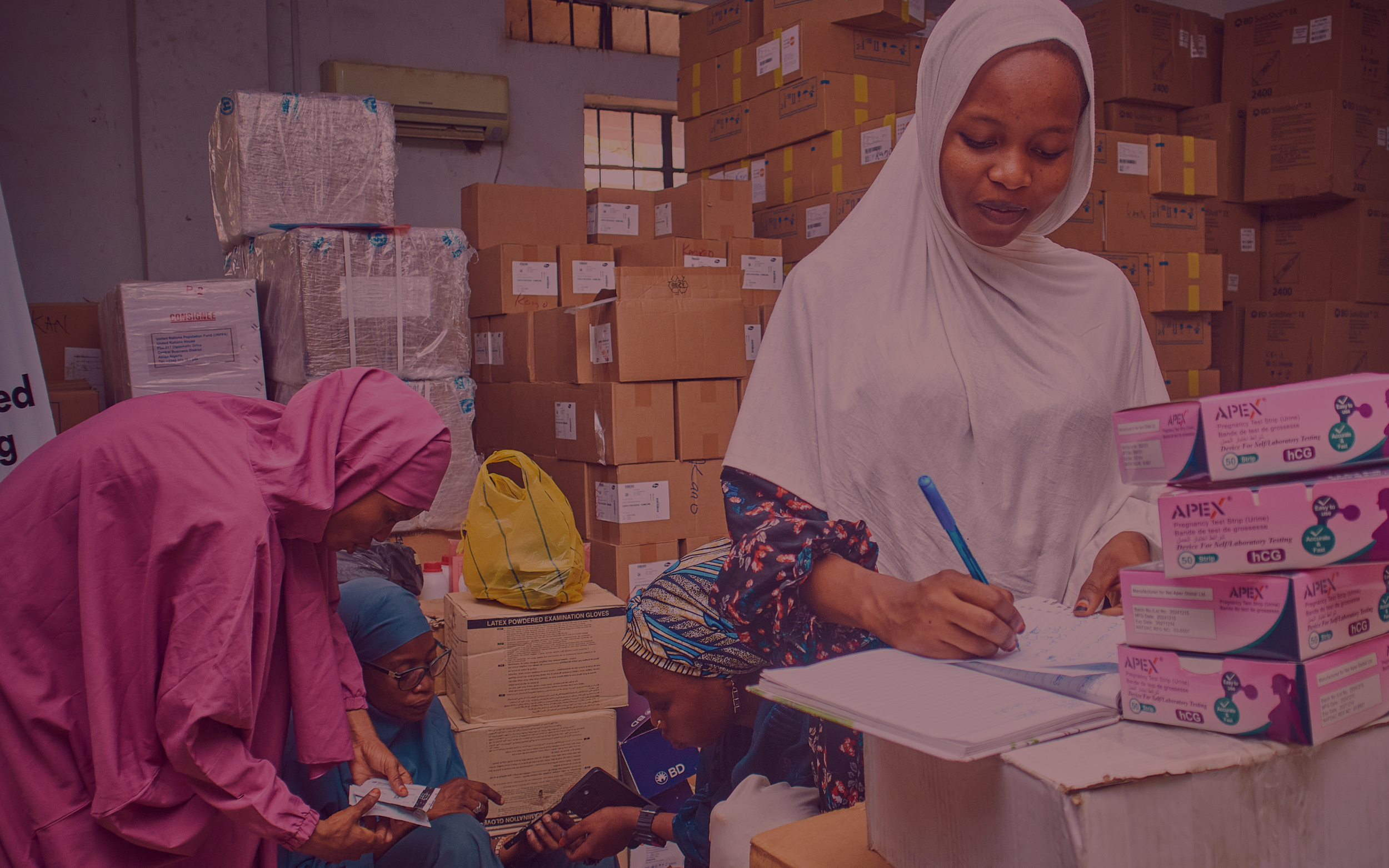
We train and supervise governmental health workers called ‘Lafiya Sisters’ in family planning counselling for those communities.
Our Model
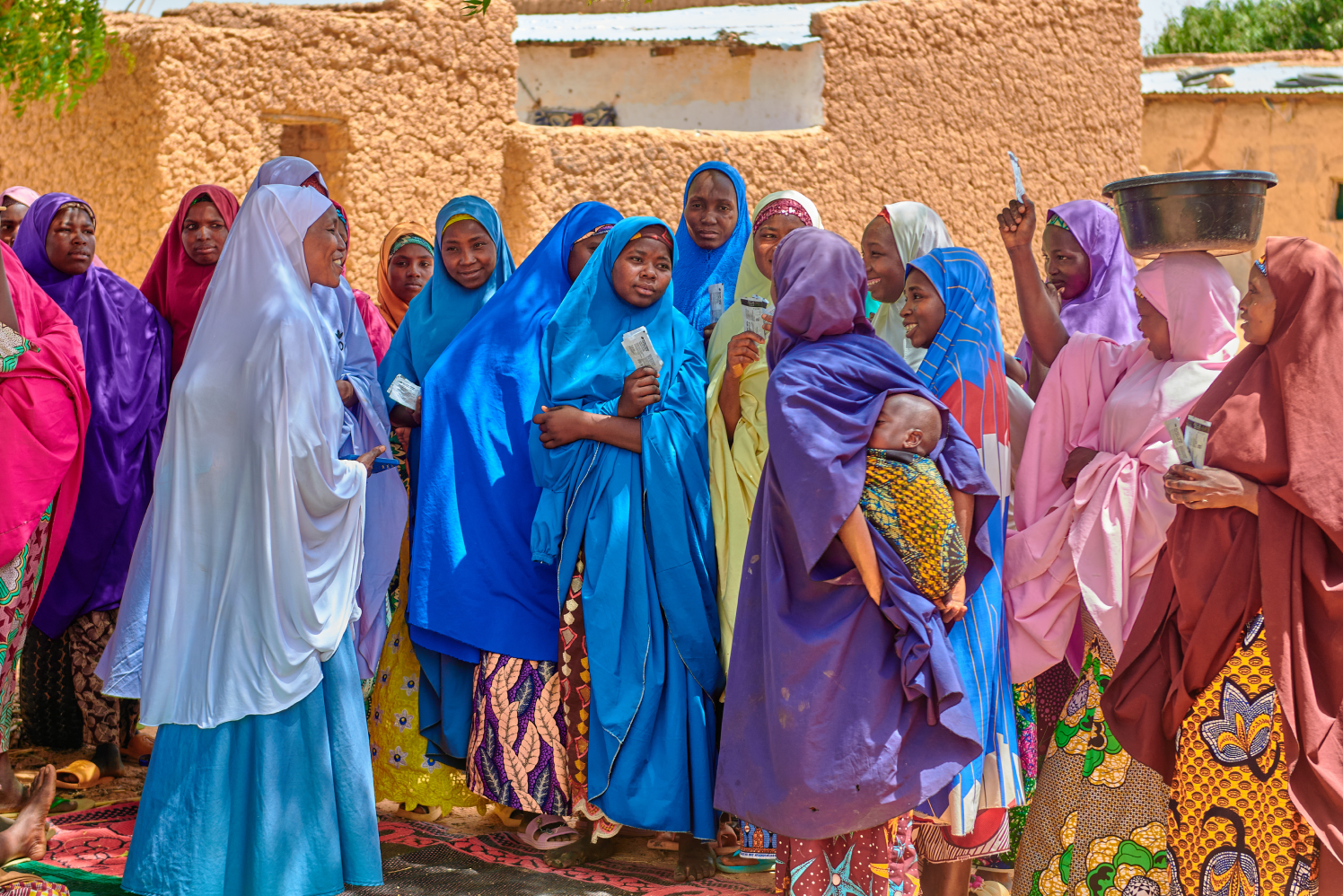
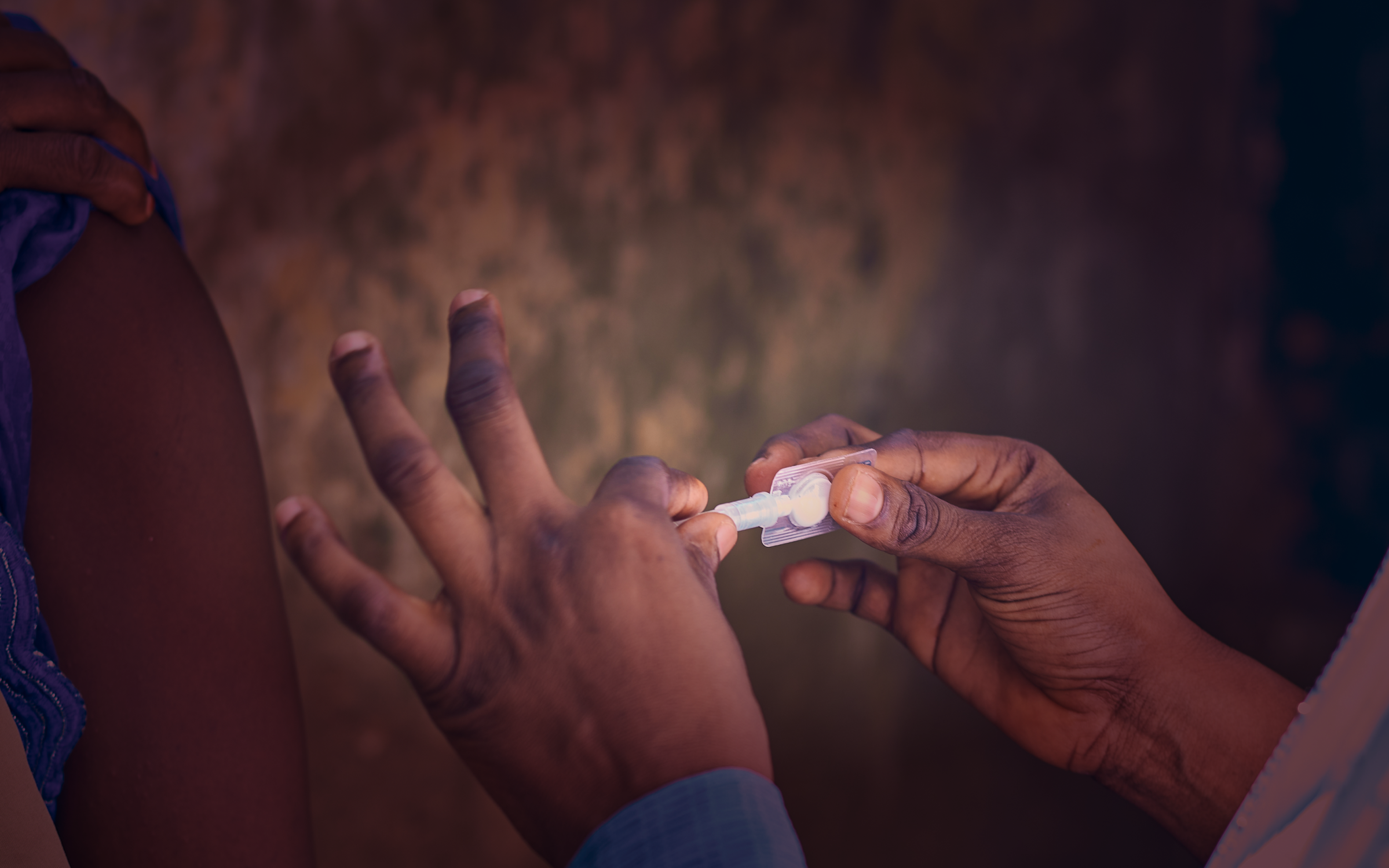
We procure and provide DMPA-SC free of charge, which provides contraceptive cover for three months from a single injection.
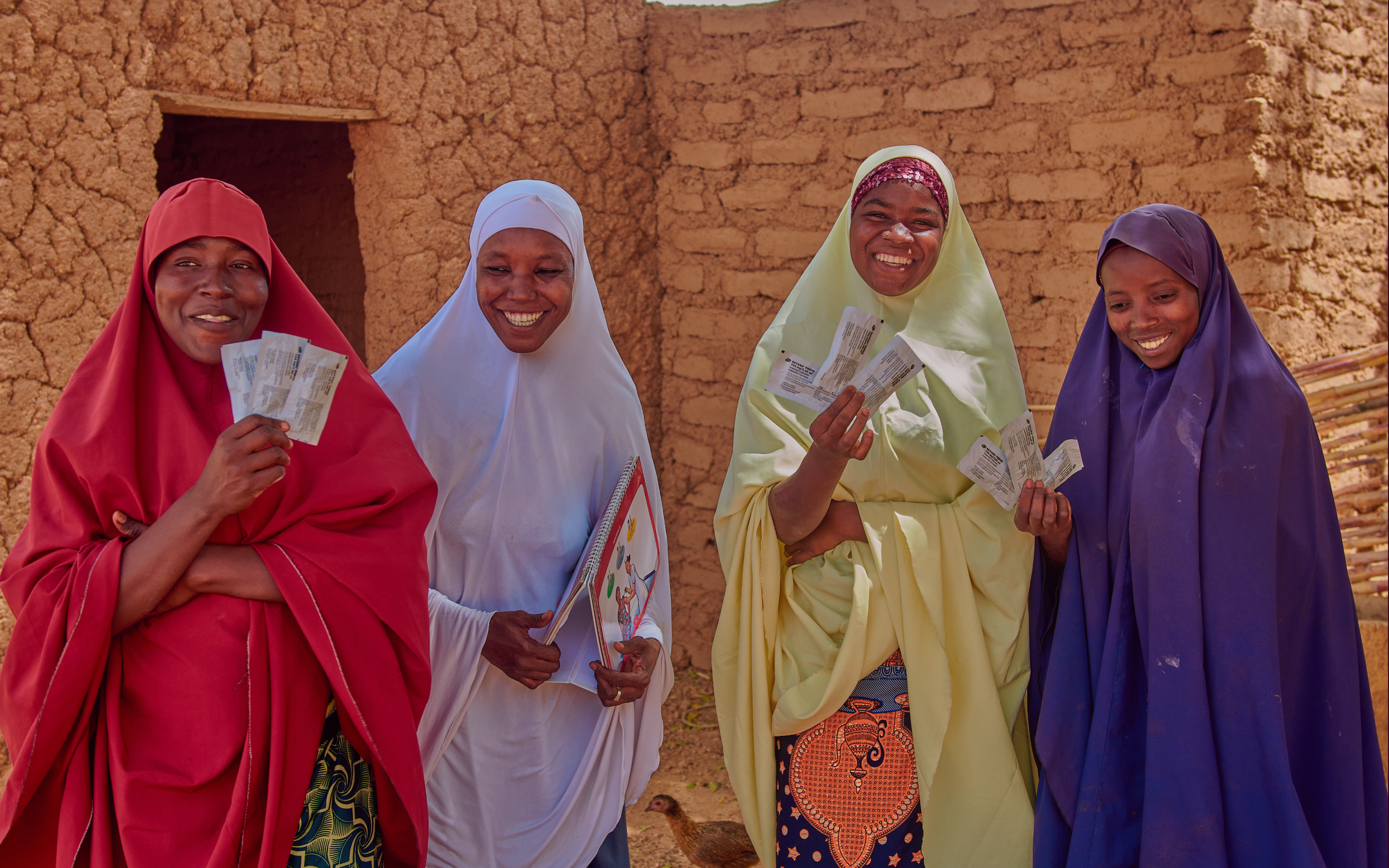
Among the available contraceptives (i.e. condoms, hormonal pills, patches and rings, injectables and implants), Lafiya focuses on increasing access to the self-injectable DMPA-SC, because it is uniquely suited for the cultural and economic context in which we work.
Effective
>99% if used correctly (injections are timely and done in the right part of the body) and 94% effective with typical use.
Context appropriate
Specifically designed for remote, low-resource settings. Doses are compact, discreet, and require no refrigeration.
Long-acting
Each dose prevents pregnancy for three months, which aligns with women’s family spacing preferences.
Our Model
We share data with the government to inform more accurate national projections of contraception demand.
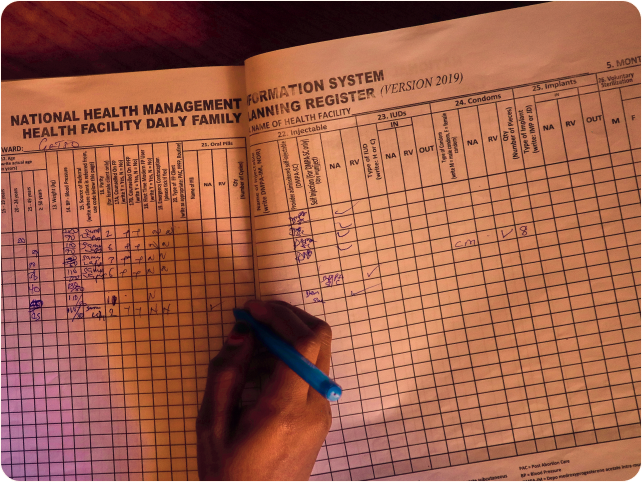
In Nigeria, healthcare records are often logged by hand, which keeps helpful data just out of reach.
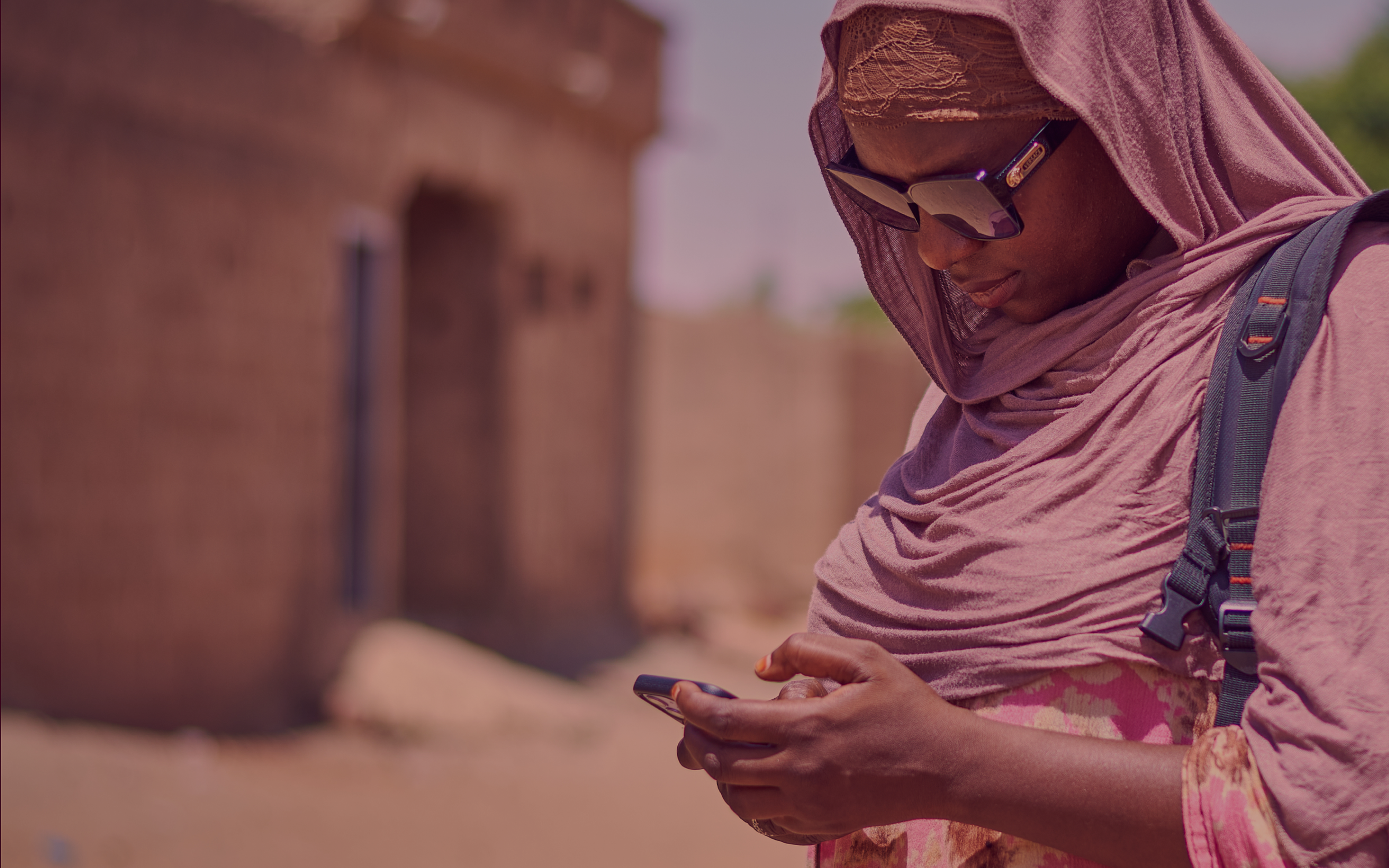
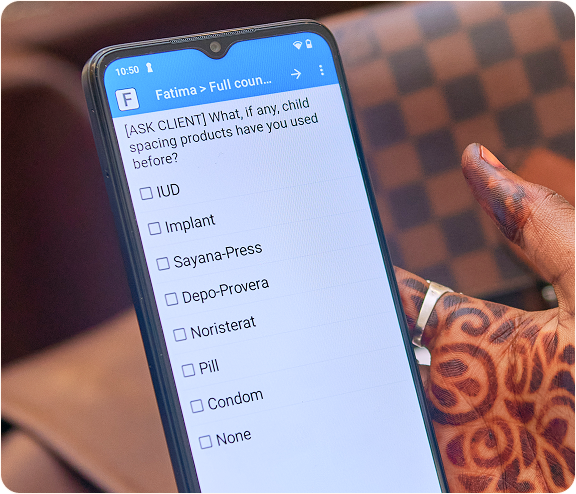
Lafiya Sisters record healthcare data with our internal digital tool. This way, we can better measure our impact, unmet need, and look for patterns that could help the government or other organisations better support family planning.

OUR PATH TO SCALE
We scale by working with governments to execute, pay and take ownership of the model.
We get states to commit budget to family planning by matching with philanthropy, increasing the available budget for family planning commodities.
Our Impact
Rapid impact with Government Engagement
In just four years since our founding, we have achieved early wins and milestones that validate our model and impact.
We have signed two cost-sharing agreements with Sokoto and Kebbi state governments, where they start co-paying for contraceptive products. This is a huge step towards sustainable health financing! In 2026, we target to launch more cost-sharing partnerships with state governments.
*updated as of March 2026
470+
Existing government midwives, nurses, and community health workers we recruited and trained.
450,000+
women reached in Nigeria
200+
government health facilities Lafiya Sisters work in
1,000,000+
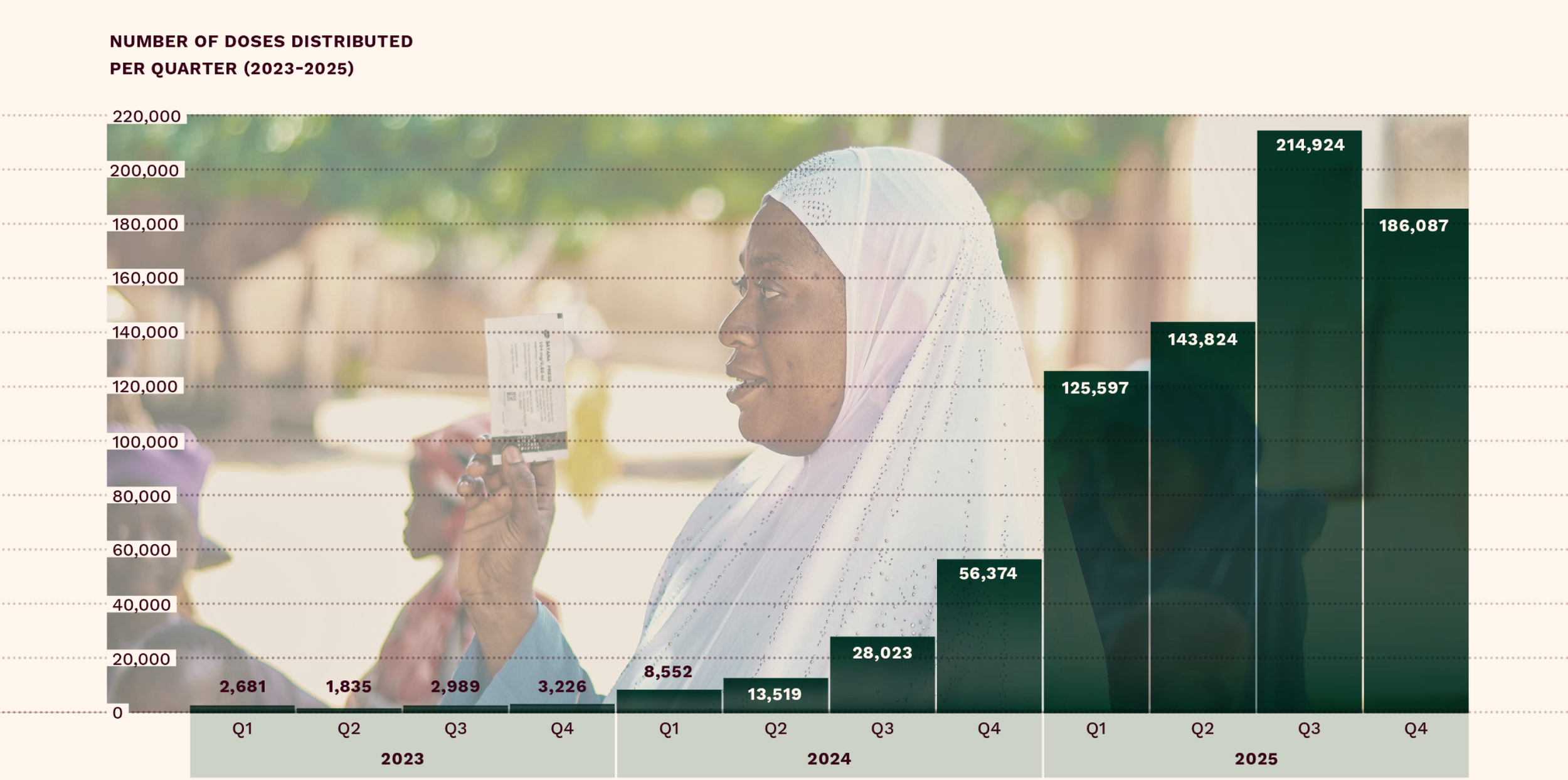
doses of DMPA-SC
Field Study
Lafiya increased uptake of modern contraception from 2% to 56% in only 8 months, and to 72% at 18-month follow up
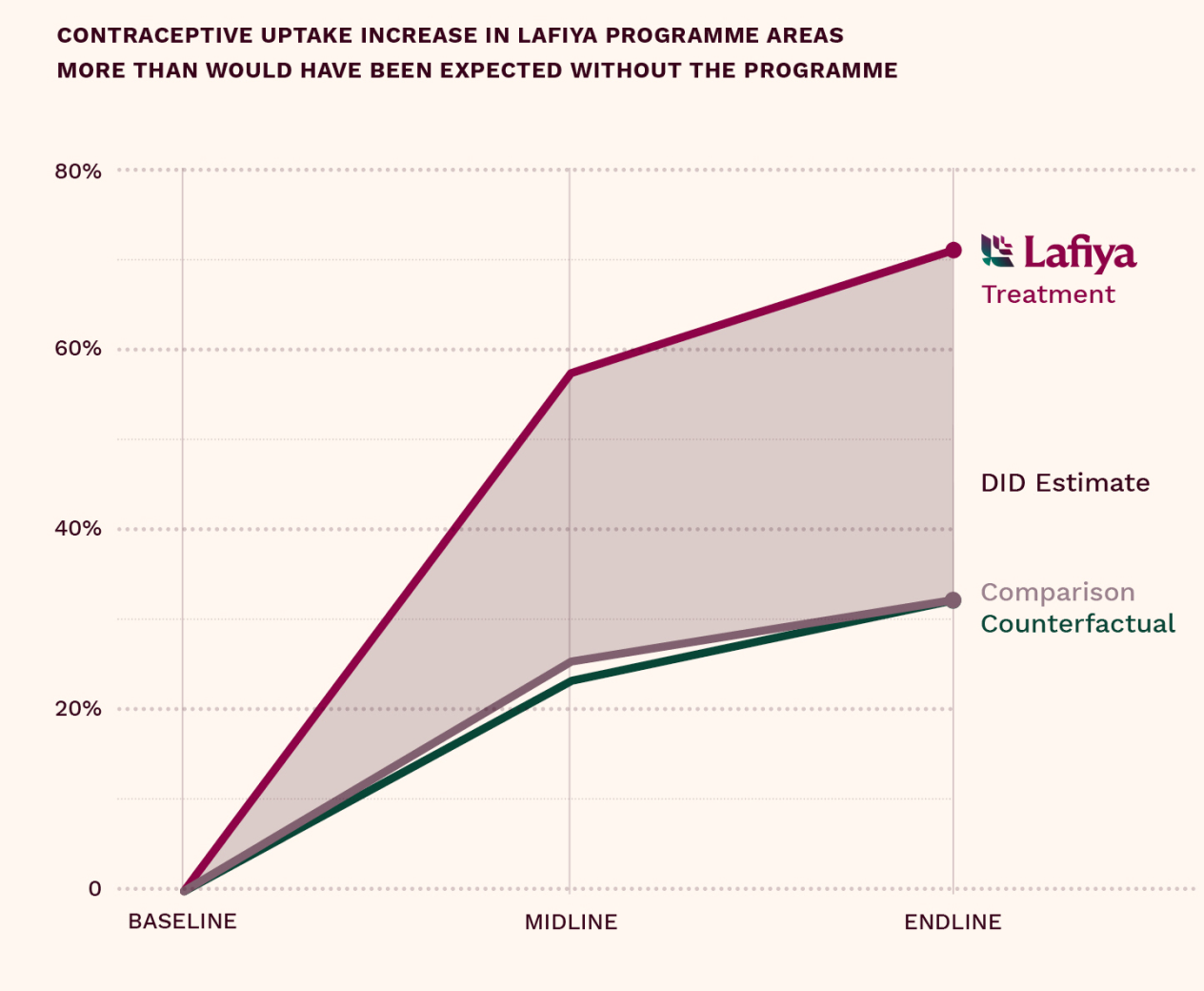
This was based on an evaluation with a difference-in-differences design conducted in Sokoto state from 2024-2025. This represents a statistically significant 39 percentage point increase over the counterfactual (what we can assume would happen without Lafiya if other health system activities continued).
Our data shows that we are reaching women whom the health system was not, and changing their behaviour:
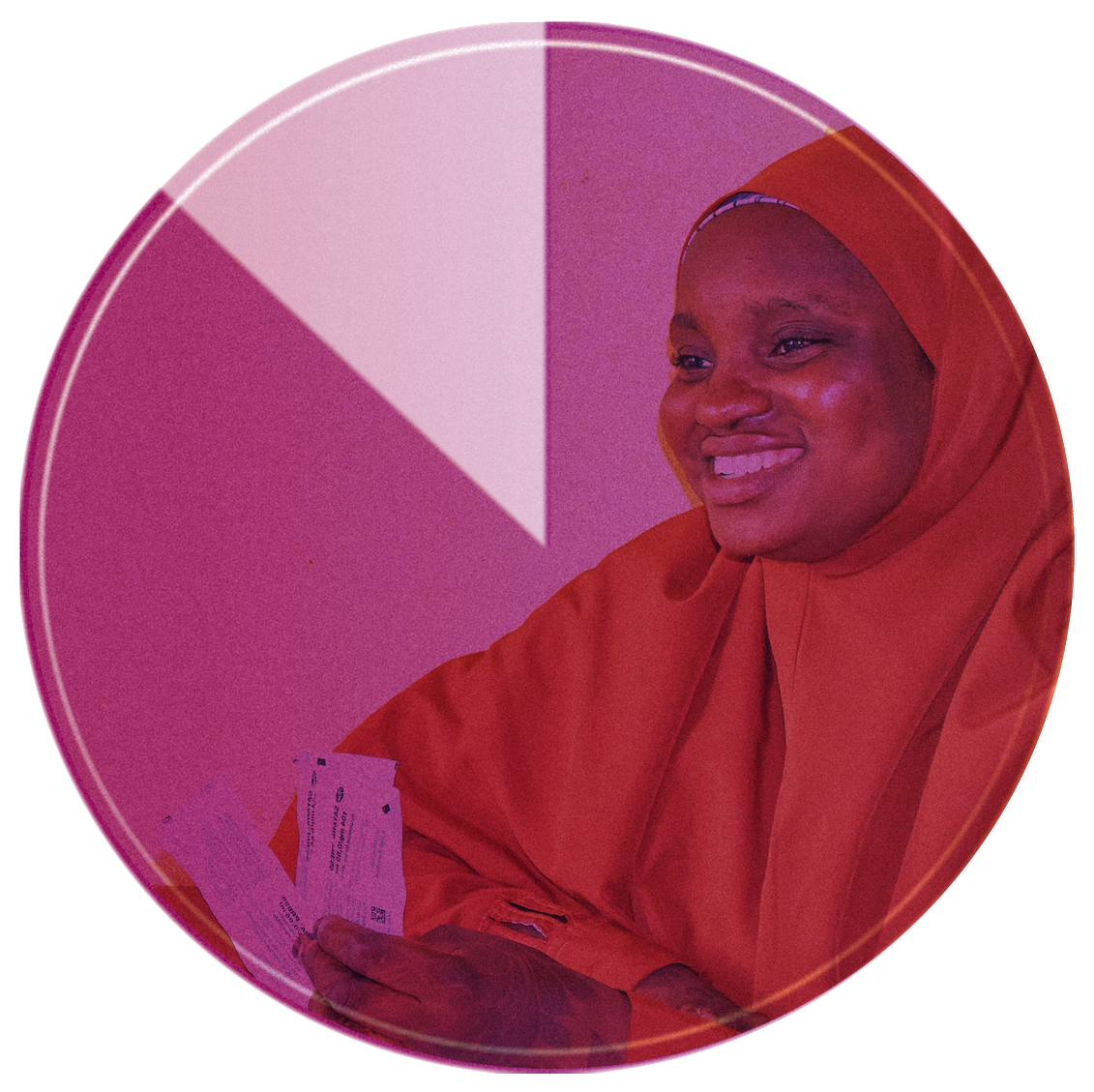
83%
of women report
continuous usage
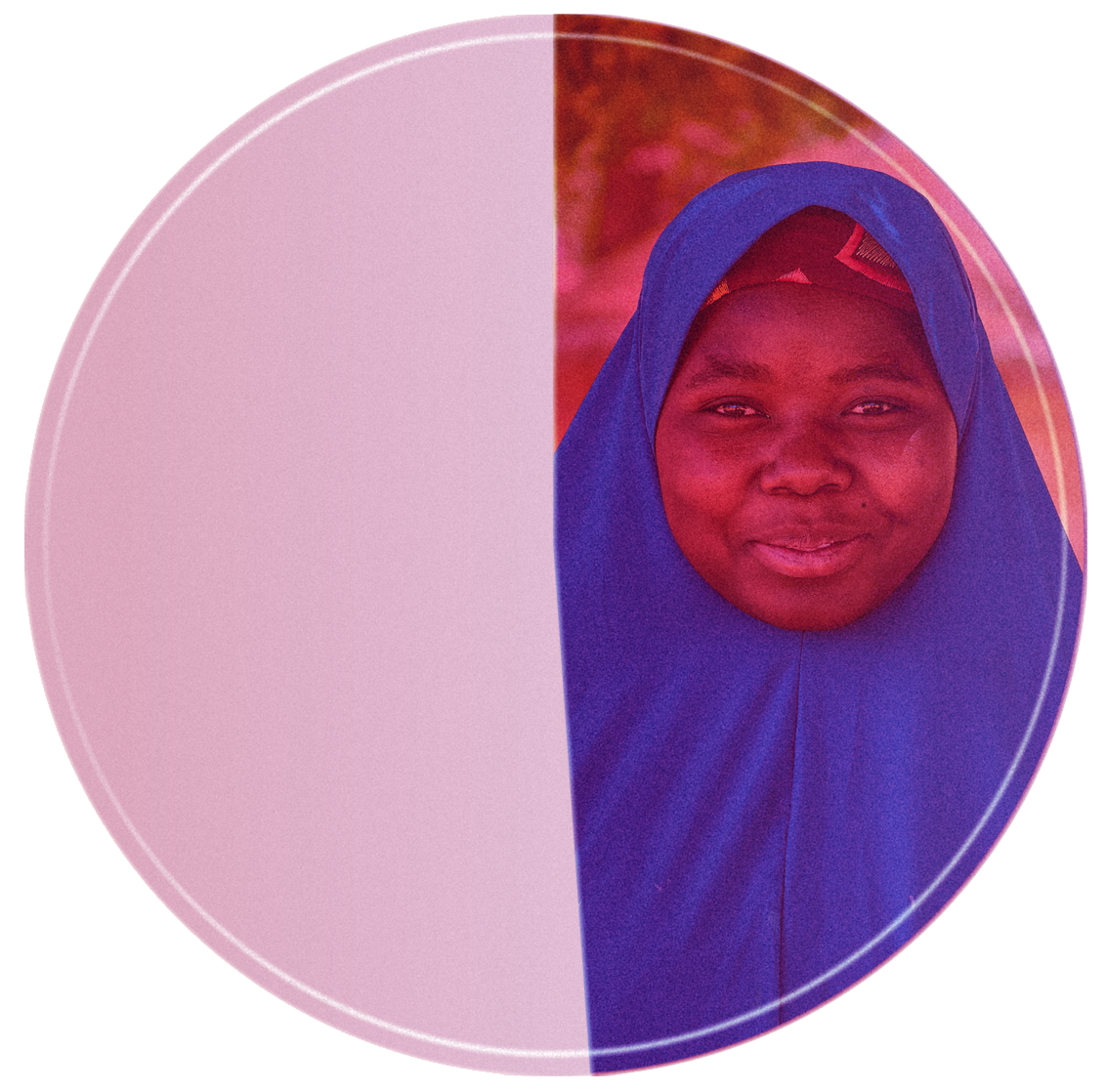
48%
of users are first time ever contraceptive users
Impact Stories
-
![]()
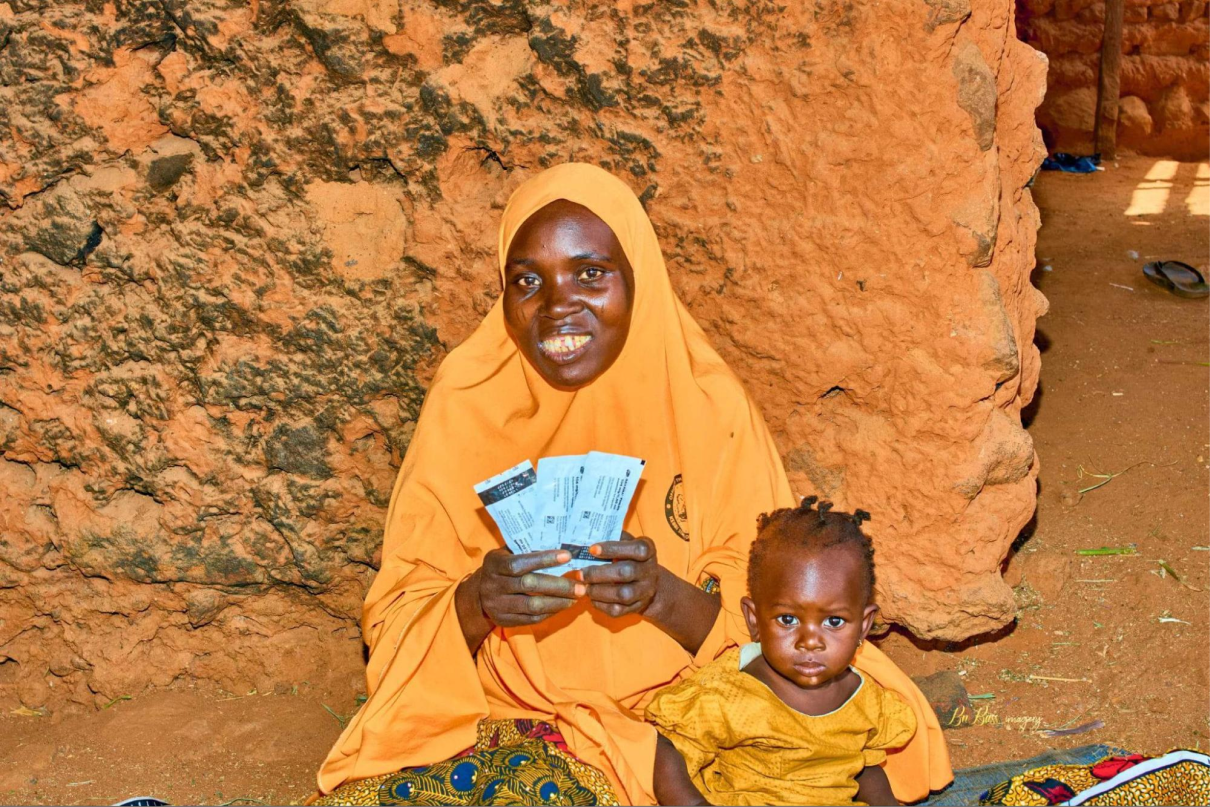
Gambo (33), Kano
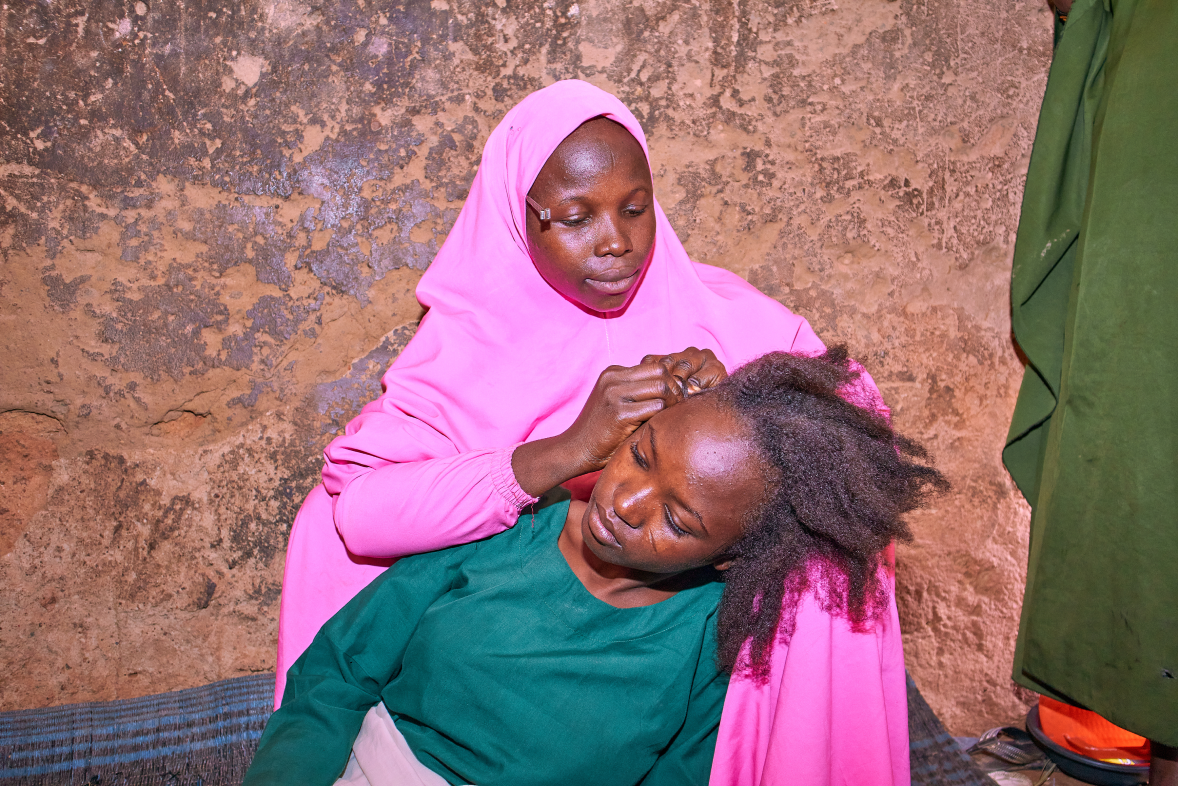
Gambo (33) told the Lafiya Sister in her community: ‘I'm good at braiding hair and wanted to open a salon. Because I was often pregnant, I couldn't focus on work.” She states: “My husband advised me against family planning because he was afraid of the high recurring costs of the injections. Thanks to the Lafiya Sisters, I was able to convince him to try it. I finally started my own home salon and already have regular clients. I can take better care of my children without worrying about them not having enough to eat.’’
-
![]()
Hauwa’u (21), Kebbi
Hauwa’u already has six children. She gave birth to her first child at age 15. She told Amina, the Lafiya Sister: “During my sixth pregnancy, I became very weak, sick, and tired of life. My parents live far away in another community, so I had no family support. I usually gave birth at home; during my sixth birth, the placenta did not come out. The traditional birth attendant gave me herbs, believing it would help, but nothing worked. My situation became critical. When Amina came to my village, my life changed. For the first time in my life, I am no longer afraid of getting pregnant every year. My body is resting, and my health is getting better. I became friends with Amina, and she taught me how to knit local Hausa caps to earn some extra income for my family.”
-
![]()
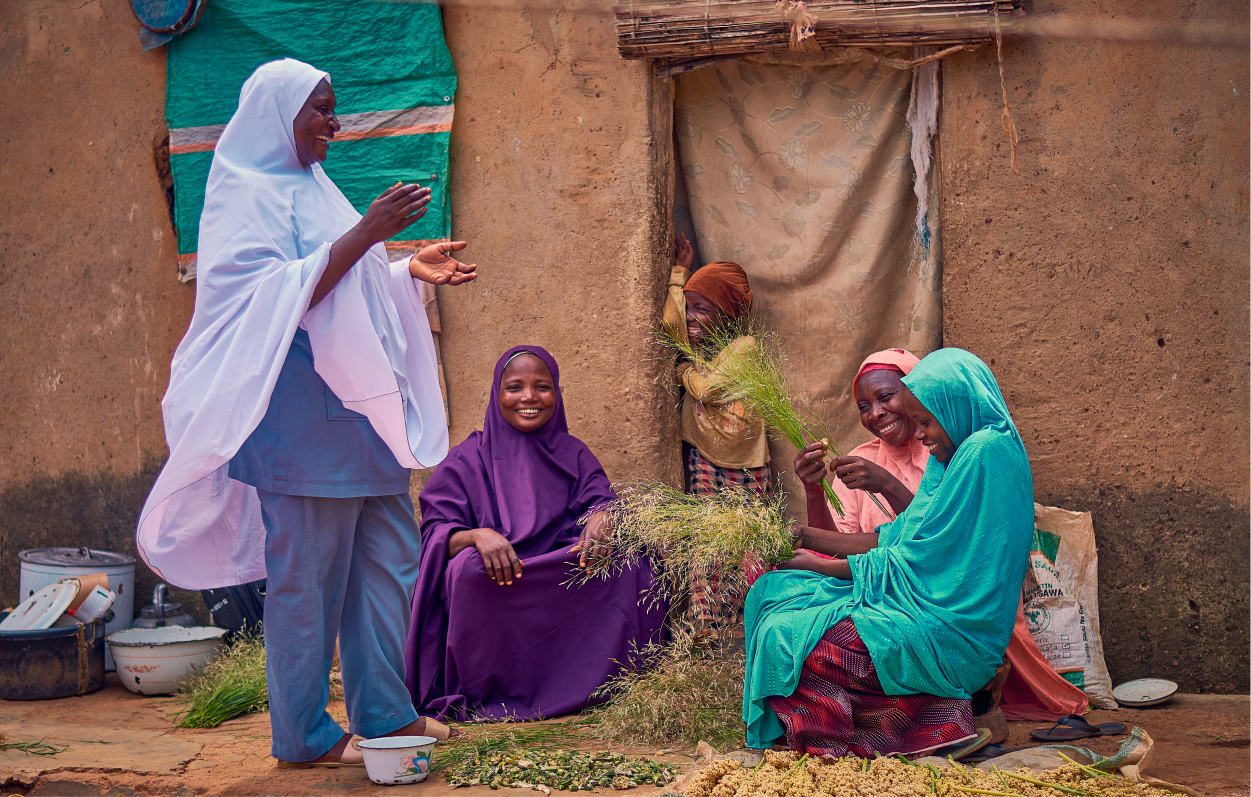
Bilkisu (47), Halima (37), and Zuwaire (30), Jigawa State
When Malam got increasingly worried about feeding his 21 children, he asked the Lafiya Sister in his community for help. Bilkisu (47), Halima (37), and Zuwaire (30) live in Jigawa State. They are Malam’s co-wives. Between them, they have 21 children. Upon learning that the Lafiya Sister could distribute contraceptives for free, he called his three wives to join the conversation. All three women shared that they used to become pregnant again before their newborn had even stopped breastfeeding, and it took a toll on their bodies.
Bilkisu, Halima, and Zuwaire were excited to try out the injectable DMPA-SC and adopted it immediately during the visit. Zuwaire says: “We now have a chance to focus more on our small business: making brooms to sell to families for their households.”
Contraceptive is cost-effective
Family planning is an extremely cost-effective way to save lives (GiveWell). Lafiya’s model of delivering this solution is $7/year, well-below the cost-effectiveness benchmark of $20/year stated in this report.
Analysis shows that our model could reach 42x the cost-effectiveness of cash transfers by late 2026.
$2,451
to save a maternal life
$38
per maternal DALY averted
371
Maternal lives saved
23,000
Maternal DALYs averted